
Hosted by site sponsor WebMate.
Unibody MacBook Pro Q&A
Update Published August 9, 2021
All Mac Q&As >> Unibody MacBook Pro Q&A | Also See: All MacBook Pro Specs
To be notified of new Q&As, sign up for EveryMac.com's bimonthly email list.
How do you upgrade the hard drive in the "Mid-2009" through "Mid-2012" Unibody MacBook Pro models? What type of hard drive do these models support? How do you replace the hard drive with an SSD?
Please note that this Q&A is up-to-date and covers pre-Retina "Unibody" MacBook Pro models. EveryMac.com also provides instructions for upgrading the storage in the subsequently introduced 13-Inch and 15-Inch Retina Display MacBook Pro models.
Upgrading the hard drive in the "Mid-2009," "Mid-2010," "Early 2011," "Late 2011" and non-Retina Display "Mid-2012" MacBook Pro models requires a screwdriver, but it still is a simple and straightforward procedure. If a hard drive was installed by default, it is quite possible to replace the stock hard drive with an SSD, too.
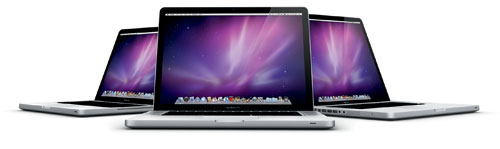
Photo Credit: Apple, Inc. ("Unibody" MacBook Pro Models)
Identification Help
If you're not sure which "Unibody" MacBook Pro model you have, many of these systems share Model Numbers, unfortunately. EMC Numbers are not externally listed, either.
As a result, they only can be externally differentiated by the Serial Number courtesy of EveryMac.com's Ultimate Mac Lookup feature.
However, in software, it also is possible to get "close enough" to an exact match to determine hard drive compatibility and SATA connection type by Model Identifier. In turn, each model can be uniquely identified via model identifier and one or more secondary identifiers (like processor speed and/or processor type).
To locate the model identifier in software, select "About This Mac" under the Apple Menu on your computer and click the "More Info..." button. If the MacBook Pro is running OS X 10.7 "Lion" or later, you will need to click the "System Report" button after clicking "More Info..." as well.
For example, the 13-Inch "Mid-2010" MacBook Pro models -- which support 3.0 Gb/s SATA 2.0 -- can be identified by the model identifier MacBookPro7,1. Likewise, the non-Retina Display 15-Inch "Mid-2012" MacBook Pro models -- which support 6.0 Gb/s SATA 3.0 -- can be identified by the MacBookPro9,1 model identifier. A full chart is provided below.
More details about specific identifiers are provided in EveryMac.com's extensive Mac Identification section.
Hard Drive Types & SSD Replacement Options
All of these MacBook Pro models support a 2.5" notebook hard drive or SSD that is up to 9.5 mm tall (0.37 inches) and use a SATA interface, but the maximum SATA interface speed of different models varies.
When the "Mid-2009" MacBook Pro models first were released, systems configured with a hard drive only had 1.5 Gb/s SATA enabled, whereas systems configured with an SSD had faster 3.0 Gb/s SATA 2.0 enabled. This caused a great deal of discontent among those across the blogosphere interested in performing their own SSD upgrades, but thankfully Apple quickly corrected this issue with a software update.
The "Mid-2010" MacBook Pro models were properly enabled with 3.0 Gb/s SATA 2.0 by default, and subsequent models are equipped with faster 6.0 Gb/s SATA 3.0.
The Serial ATA (SATA) standard for each of these specific models along with its precise corresponding Model Identifier may be helpful:
MacBook Pro |
Subfamily |
Model Identifier |
Serial ATA |
Mid-2009 |
3.0 Gb/s (2.0)* |
||
Mid-2009 |
3.0 Gb/s (2.0)* |
||
Mid-2009 |
3.0 Gb/s (2.0)* |
||
Mid-2009 |
3.0 Gb/s (2.0)* |
||
Mid-2009 |
3.0 Gb/s (2.0)* |
||
Mid-2009 |
3.0 Gb/s (2.0)* |
||
Mid-2009 |
3.0 Gb/s (2.0)* |
||
Mid-2009 |
3.0 Gb/s (2.0) |
||
Mid-2010 |
3.0 Gb/s (2.0) |
||
Mid-2010 |
3.0 Gb/s (2.0) |
||
Mid-2010 |
3.0 Gb/s (2.0) |
||
Mid-2010 |
3.0 Gb/s (2.0) |
||
Mid-2010 |
3.0 Gb/s (2.0) |
||
Mid-2010 |
3.0 Gb/s (2.0) |
||
Mid-2010 |
3.0 Gb/s (2.0) |
||
Mid-2010 |
3.0 Gb/s (2.0) |
||
Mid-2010 |
3.0 Gb/s (2.0) |
||
Early 2011 |
6.0 Gb/s (3.0) |
||
Early 2011 |
6.0 Gb/s (3.0) |
||
Early 2011 |
6.0 Gb/s (3.0) |
||
Early 2011 |
6.0 Gb/s (3.0) |
||
Early 2011 |
6.0 Gb/s (3.0) |
||
Early 2011 |
6.0 Gb/s (3.0) |
||
Early 2011 |
6.0 Gb/s (3.0) |
||
Late 2011 |
6.0 Gb/s (3.0) |
||
Late 2011 |
6.0 Gb/s (3.0) |
||
Late 2011 |
6.0 Gb/s (3.0) |
||
Late 2011 |
6.0 Gb/s (3.0) |
||
Late 2011 |
6.0 Gb/s (3.0) |
||
Late 2011 |
6.0 Gb/s (3.0) |
||
Late 2011 |
6.0 Gb/s (3.0) |
||
Mid-2012 |
6.0 Gb/s (3.0) |
||
Mid-2012 |
6.0 Gb/s (3.0) |
||
Mid-2012 |
6.0 Gb/s (3.0) |
||
Mid-2012 |
6.0 Gb/s (3.0) |
||
Mid-2012 |
6.0 Gb/s (3.0) |
* These models support 3.0 Gb/s (SATA 2.0) if the software has been updated from the default installation.
For storage compatibility details for each Mac, including all MacBook Pro models, refer to EveryMac.com's Mac Storage Upgrade Compatibility Guide.
Hard Drive Upgrade Instructions
Apple explains how to replace the hard drive starting on page 35 of the 13-Inch, 15-Inch, and 17-Inch "Mid-2009", 13-Inch, 15-Inch, and 17-Inch "Mid-2010," and 13-Inch, 15-Inch and 17-Inch "Early 2011" MacBook Pro User Guides, respectively, and this provides most of what you need to know to upgrade the default storage.
The "Late 2011" MacBook Pro models are so similar to the "Early 2011" models that Apple didn't bother to release an updated instruction manual. For the "Mid-2012" MacBook Pro line, Apple's "Quickstart" Guide does not cover hard drive installation, but it is the same process as it is for earlier models.
The Apple manuals provide installation instructions complete with drawings, and definitely should be reviewed prior to upgrading the hard drive, but even better, site sponsor Other World Computing provides convenient step-by-step videos of the process for the 13-Inch, 15-Inch, and 17-Inch models alike.
13" MacBook Pro Hard Drive/SSD Upgrade Video
Mid-2009 (MacBookPro5,5)
13" MacBook Pro Hard Drive/SSD Upgrade Video
Mid-2010 (MacBookPro7,1)
13" MacBook Pro Hard Drive/SSD Upgrade Video
Early 2011 (MacBookPro8,1)
13" MacBook Pro Hard Drive/SSD Upgrade Video
Non-Retina Mid-2012 (MacBookPro9,2)
15" MacBook Pro Hard Drive/SSD Upgrade Video
Mid-2009 (MacBookPro5,3)
15" MacBook Pro Hard Drive/SSD Upgrade Video
Mid-2010 (MacBookPro6,2)
15" MacBook Pro Hard Drive/SSD Upgrade Video
Early 2011, Late 2011 (MacBookPro8,2) & Non-Retina Mid-2012 (MacBookPro9,1)
17" MacBook Pro Hard Drive/SSD Upgrade Video
Mid-2009 (MacBookPro5,2)
17" MacBook Pro Hard Drive/SSD Upgrade Video
Mid-2010 (MacBookPro6,1)
17" MacBook Pro Hard Drive/SSD Upgrade Video
Early 2011 & Late 2011 (MacBookPro8,3)
After watching these videos, it should be clear that upgrading the hard drive in these models is straightforward.
Hard Drive Cable Replacement Instructions
When you are upgrading or replacing the hard drive, you may notice that the original hard drive cable has become brittle or damaged and needs to be replaced. Site sponsor Other World Computing provides convenient step-by-step videos of the process to replace the hard drive cable in many of these models, too.
13" MacBook Pro Hard Drive Cable Replacement Video
Early 2011 & Late 2011
15" MacBook Pro Hard Drive Cable Replacement Video
Mid-2010, Early 2011, & Late 2011
13" MacBook Pro Hard Drive Cable Replacement Video
Mid-2012
15" MacBook Pro Hard Drive Cable Replacement Video
Mid-2012
If you can handle the process to upgrade the hard drive, replacing the hard drive cable should be fine, as well. However, if you do not feel comfortable -- or have the time -- to perform these upgrades yourself, hiring a professional always is a good option.
MacBook Pro Storage Purchase Options
In theory, just about any hard drive or SSD that meets the minimum requirements should work in the MacBook Pro. However, it always is best to buy from a trusted company with Mac knowledge for the most trouble-free experience.
Site sponsor Other World Computing sells storage as well as memory for just about all MacBook Pro models for do-it-yourself upgrades.
Also see:
- How do you upgrade the RAM in the "Mid-2009" through "Mid-2012" MacBook Pro models? What type of RAM do they use? How much RAM does each model actually support?
- How do you replace the optical drive in the "Unibody" MacBook Pro models with a hard drive or SSD? Is it possible?
Permalink | Report an Error/Typo | Sign Up for Site Update Notices
<< Unibody MacBook Pro Q&A (Main) | Also See: All MacBook Pro Specs
Established in 1996, EveryMac.com has been created by experts with decades of experience with Apple hardware. EveryMac.com includes, and always has included, original research incorporating detailed, hands-on inspection of packaging, computers, and devices as well as extensive real-world use. All information is provided in good faith, but no website or person is perfect. Accordingly, EveryMac.com is provided "as is" without warranty of any kind whatsoever. EveryMac.com, and the authors thereof, shall not be held responsible or liable, under any circumstances, for any damages resulting from the use or inability to use the information within. For complete disclaimer and copyright information please read and understand the Terms of Use and the Privacy Policy before using EveryMac.com. Copying, scraping, or use of any content without expressed permission is not allowed, although links to any page are welcomed and appreciated.